Month: December 2019

  • CHRISTMAS TRADITIONS AROUND THE WORLD

    Christmas in Spain

    It’s that wonderful time of the year again! While there’s reason for stress, amplified loneliness, or reflection on the negative, there’s ample stimuli to bring us feelings of love, joy and excitement. Almost all of the positive arises from the colorful traditions dating back centuries ago in countries we may never have visited. We are beneficiaries of those enduring customs and that is especially true here in the melting pot known as the United States of America. Let’s visit a few of those countries now and see what they contributed to the holiday season as we know it.

    Germany

    Germans have held steadfastly to their Christmas traditions. They have reasons to be proud of them. Their country was the first to bring the evergreen tree inside for holiday decorations. That was in the 16th century. Martin Luther was walking the streets of Germany then and it is said that he was the first to place lighted candles on the Christmas tree.

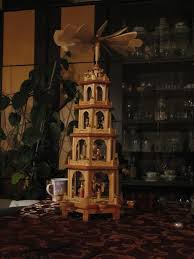
    Before the Christmas tree, the Christmas pyramid was very popular in Germany. It continues to have its place today. The Christmas pyramid has its origins in the Middle Ages. It is made of wood and has three or more platforms with decorative sides and a pole through the center. It’s hung from the ceiling usually, turning to show such things as nativity scenes, angels or folksy figures.
    The Germans also originated Advent celebrations and Christmas markets. They emphasize Saint Nicholas Day as well.

    Italy

    Obviously, a huge part of Italy’s Christmas revolves around the Vatican. A huge Christmas tree is erected in front of St. Peter’s Cathedral for the season. People buy tickets for Midnight Mass, a sacred worldwide event officiated by the Pope.

    Nativity scenes actually originated in Italy and they remain a basic part of the holy Christmas ambiance.

    In communities around the country, bagpipers and flutists known as zampognari enter the towns and play publicly. They dress as and represent shepherds looking for the baby Jesus.

    Father Christmas comes and brings gifts to the children on Christmas Eve. In Italy, he is called Babbo Natale. The gift exchange by everyone else is not held until January 6th. A traditional food for that occasion is pannettone, a sweet yeast cake.

    Norway

    On visitoslo.com, you will find the following quote: “Christmas in Norway is based on Christian traditions, with elements of old pagan traditions and Jewish Hanukkah. And new traditions are added every year.” Let’s concentrate on those old ones, though. After all, what’s a tradition without some time built into it?

    On December 23rd, families have their own “Little Christmas Eve.” They enjoy good company and special foods such as risengrynsgrot, a hot rice pudding that has one almond hidden in it somewhere. The lucky person with the almond wins a marzipan pig. It’s also common for people to make a gingerbread house on this occasion.

    On actual Christmas Eve, Norwegians run around getting gifts or going to church services. At 5:00 PM, the stores and pubs close and everyone is supposed to head home to place the presents under their trees. Dinner follows. “The most popular Christmas Eve dinner is the ribbe (pork ribs or pork belly, bone in), but lutefisk (cod cured in lye), pinnekjøtt (dry-cured ribs of lamb), boiled cod, ham roast and turkey are also common dishes.” Then, after dinner, the gifts are opened.

    Israel

    In this region known to many as The Holy Land, Christians are much in the minority. Israel, however, is the one country in the Middle East where Christians are widely granted the right to worship in peace. Interestingly, Jerusalem is known as the city of three Christmases. It is recognized by different denominations on different days. The Catholics and Protestants have their services on December 25th, but the Orthodox Christians celebrate on January 6th and the Armenian Christians do theirs on January 18th.

    In Nazareth, a Christmas Eve parade is held along the main street. It works its way to the Basilica of the Annunciation. Then, in the evening, Israel’s Ministry of Tourism sponsors a fireworks display.

    Starting three weeks before Christmas, many Israeli Christians light a candle weekly until the holiday arrives. Many attend church services with communion. Getting together with friends and relatives is common as it is with Christians all over the world, but the food served has its own Middle East unique character. Barbecue, salads, grape leaves and savory pastries are consumed with a seasonal delight.

    We Are The World

    As we enjoy our own American traditions, it’s nice to think of those around the globe who are spending Christmas in their own nostalgic customs. May we find unity as we raise our voices in joy and praise to the Christ in all of us.

  • WHAT HAPPENED TO THE HIPPIES?

    In the midst of maintaining this blog, working on another novel, doing a little freelance work and composing as well as playing music, I wrote a short memoirish piece for a book that has just been released–What Happened to the Hippies? Voices and Perspectives. I’m one of many contributors. The author who created it and assembled the contributors’ articles is Stewart L. Rogers.

    The Basic Concept

    Stewart writes in his poignant introduction that the years 1970 through 1973 were by far the best time of his life. He had tired of chasing goals that didn’t really matter and trying to fit himself into smaller and smaller boxes. Taking on a new identity aligned with love and understanding, peace and generosity, he saw himself as an authentic pioneer. He knew he had ideals in common with his brothers and sisters of his generation. “Exhilarated with hope, giddy with freedom, turned on with idealism,” he was immersed in a movement that was changing the world.

    By 1974, Stewart was being consumed by a world changing him. He found himself caught up in marital chaos and, as he puts it, “a relentless struggle for money.” This went on for 30 years. Finally, he hit bottom and saw he had a choice between death through substance abuse or life through sobriety. He stopped using, seeing his life with a new perspective and clarity. He reinvented himself by combining his old hippie values with real-world experience and the result was a happiness greater than he had ever known.

    Thus, the idea for the book was born. He wondered what had happened to others who had shared his journey and values back in the day. This incredible movement, powerful socially and politically and in the arts, had practically disappeared as a societal force. Were those same people out there, living those values and still effecting change? Or were they simply absorbed by the realities of life and the all-consuming Establishment?

    The Shape of Things

    Stewart reached out through Craigslist across the country, looking for “Old Hippie Writers.” He sought short memoirs from those who responded, detailing a comparison of “what the writer did or believed in the hippie era to what he/she does and believes today.” Over 50 people wrote articles for the book. From these, we begin to see not all was lost from those special times.

    The articles were crystallized into 13 categories, making for 13 chapters. They are aptly titled according to their respective subject matter. For instance, some of the chapters are titled “Age of Aquarius,” “Flower Power,” “Free Love,” “Give Peace a Chance,” “I Have a Dream,” and “My Sweet Lord.” Stewart wrote some commentary at the beginning of each chapter.

    The book concludes with a chronological summary of events that marked the era, followed by some memorable quotes that shed light on what it was all about.

    The Contributors

    We were all asked to write a short bio. These appear near the beginning of the book. They should not be skipped. As I read through these, I was taken by the mostly fascinating stories of the lives of those who lived the hippie lifestyle for periods of their lives. Most of them still have a hand in the arts or social justice or volunteering for the good of others. I’m not going to mention any of those who stand out to me because it wouldn’t be fair to the rest who have their own unique and compelling lives. Let it suffice to say that this is quite a surprising assembly of talented people brought together by a cute Craigslist ad.

    My Takeaway

    I haven’t had a chance to read the entire book yet, as I just received it this past week. The more I read, though, the more I want to immerse myself in it. Stewart’s introductions to the chapters synthesize beautifully the various categories of the hippie experience, or to put it another way, the lifestyles which evolved in the ’60s and ’70s.

    I confess that these poignant stories of those who lived somewhat parallel lives to mine mean a great deal to me. I’m moved by what it meant to them. We are brothers and sisters of a generation and perhaps every generation relates to that in their own way. And maybe we baby boomers overestimate just how special and unique we are, but it’s hard to argue with the groundbreaking, enduring music that we produced. The progress in civil rights, women’s rights, gay rights, protection of the environment, freedom of speech, nuclear freezing and more have changed our world in huge ways. Though the pendulum has swung back in the other direction in some of these areas, I believe sanity will prevail in the long run and “hippies” old and young may still have a say in the evolution of our human community.